Regain Bladder Control
by Fixing What's
Actually Broken
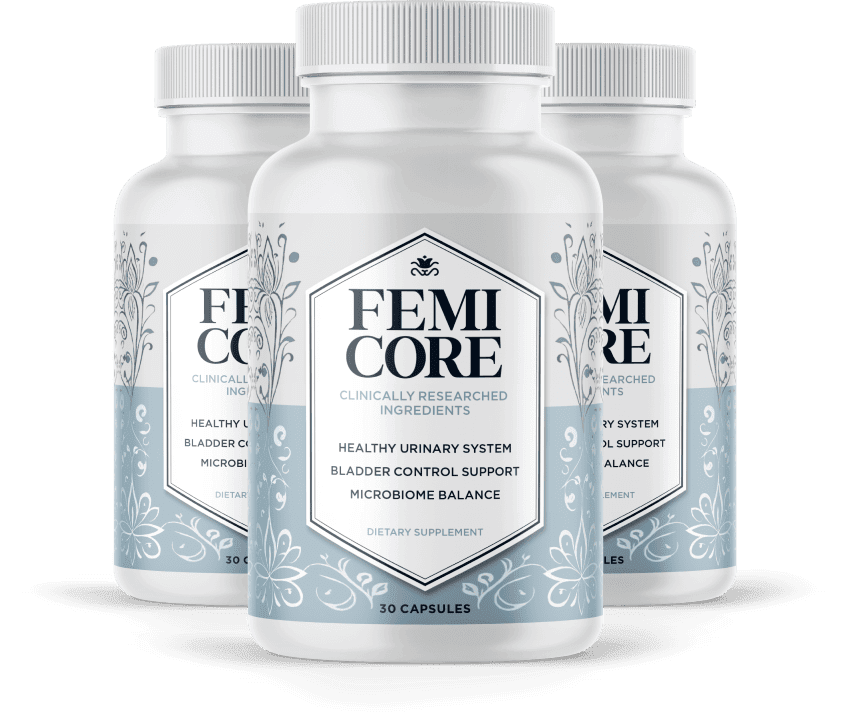
FemiCore is a clinically-formulated probiotic that rebuilds the protective Lactobacillus balance your urinary tract needs — so your body can defend itself naturally, not just react to the next infection.
Choose Your Supply
Most women need 3–6 months for full microbiome restoration. Multi-bottle packages save you more and ensure you don't interrupt the process.

- ✓60-Day Money-Back Guarantee
- ✓60-Day Money-Back Guarantee
- ✓Bonus items included
- ✓Free shipping & handling

- ✓60-Day Money-Back Guarantee
- ✓Bonus items included
- ✓Free shipping & handling
You've Done Everything Right.
So Why Does It Keep Coming Back?
We spoke with hundreds of women stuck in the same exhausting loop — trying solution after solution, only to find themselves back at square one within weeks. The list of things they'd already attempted was long:
Multiple antibiotic courses
Infection cleared, then returned — often faster than the last time.
Cranberry supplements
Brief improvement, then the urgency and discomfort crept back in.
D-Mannose capsules
Promising at first — but not a lasting solution for recurring issues.
Pelvic floor exercises
Weeks of effort with no meaningful reduction in urgency or leaks.
Dietary restrictions
Eliminating caffeine and alcohol made life less enjoyable — not the bladder.
Generic probiotics
Good for digestion. Did nothing to address urinary or vaginal microbiome balance.
"Every approach targeted the symptom. None of them addressed what was actually causing the problem to keep returning."
The Discovery That Changes
How We Understand Bladder Health
Scientists mapped the bacterial ecosystems of women with healthy bladder control versus those with urinary incontinence and recurring infections. The difference was not subtle — it was fundamental.
Women with bladder problems showed severely depleted levels of protective Lactobacillus strains — especially L. crispatus — while harmful bacteria flourished without competition.
What the research revealed:
-
1A depleted urinary microbiome — not bacteria alone — is the root driver of recurring UTIs and overactive bladder symptoms.
-
2Women treated with repeated antibiotics had even lower protective bacteria than untreated women, explaining why infections accelerate over time.
-
3No conventional treatment — antibiotics, cranberry, D-Mannose — addresses the microbiome deficit that allows the problem to persist.
-
4Restoring L. crispatus and companion strains was associated with significant improvement in bladder control and infection resistance.
The Cycle That Conventional
Medicine Keeps Reinforcing
A healthy urinary tract maintains a pH of 3.8–4.5 — held steady by Lactobacillus crispatus producing lactic acid and hydrogen peroxide. When that strain declines, everything downstream deteriorates.
A disruption occurs
Antibiotics, hormonal shifts, stress, or diet changes cause protective Lactobacillus to begin declining in your vaginal and urinary tract.
pH becomes unstable
Without adequate lactic acid production, vaginal pH climbs above the protective range — making the environment permissive for pathogens.
Harmful bacteria take hold
E. coli and other opportunistic organisms colonize the urinary tract. Your immune system activates, triggering inflammation and muscle hyperactivity.
Antibiotics clear the infection — and the defenses
The course of antibiotics resolves the acute infection but eliminates whatever protective Lactobacillus remained, leaving your microbiome more depleted than before treatment.
The next infection arrives sooner
With weakened defenses, harmful bacteria face less resistance. The cycle shortens — from once a year, to once a quarter, to once a month.
Breaking this cycle requires rebuilding — not more antibiotics. FemiCore is designed to do exactly that: restore the protective Lactobacillus ecosystem so your body can maintain its own defenses.
A Formula Designed to Restore, Not Simply Suppress
Once the mechanism was clear, the solution followed naturally: give the urinary microbiome the precise Lactobacillus strains it needs to rebuild its own protective function — rather than forcing a temporary pharmaceutical response.
Most probiotic supplements are formulated for the digestive tract, using strains like L. rhamnosus and Bifidobacterium that show minimal colonization in vaginal or urinary tissue. FemiCore uses a different approach entirely.
Nine Ingredients. One Purpose:
Rebuilding Your Body's Natural Shield
Every component was selected from published clinical research — not marketing trend lists. Here's what each one does and why it's in this formula.
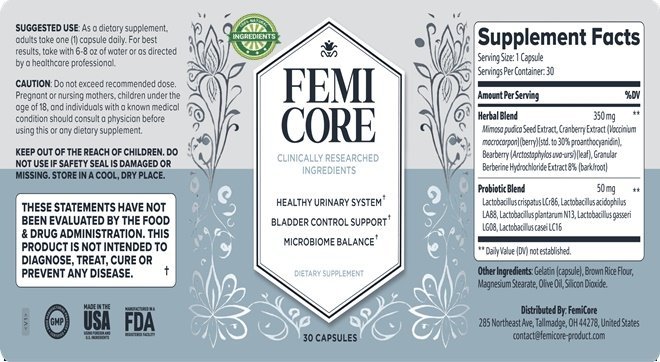
The predominant organism in a well-balanced vaginal flora. Produces both lactic acid and hydrogen peroxide simultaneously — maintaining the acidic pH (3.8–4.5) that makes E. coli colonization nearly impossible. Research consistently shows this strain is significantly lower in women with bladder control issues than in those without.
Works through the gut-vaginal axis to crowd out pathogenic organisms and reinforce immune function. Clinical evidence shows it reduces E. coli adhesion in the urinary tract — the organism responsible for the majority of UTIs — making it a core component in any urinary microbiome protocol.
One of the most acid-tolerant probiotic strains available, with demonstrated ability to survive stomach transit at higher rates than comparable organisms. A 2022 clinical trial showed meaningful reductions in both the frequency and severity of recurrent UTIs following supplementation.
Studied specifically for its capacity to colonize vaginal epithelial tissue and produce antimicrobial compounds. Operates synergistically with L. crispatus to sustain the pH environment that prevents bacterial vaginosis and urinary dysbiosis from developing.
Contributes to the immune layer of the microbiome defense system. Promotes diversity and resilience across both digestive and urinary microbiomes — so that when stress, travel, or dietary changes hit, your protective flora holds its ground rather than collapsing.
Standardized to deliver proanthocyanidins (PACs) at the dose shown in research to prevent E. coli from binding to urinary tract epithelium. Most consumer cranberry products fall short of this threshold. FemiCore uses a concentrated extract formulated to clinical specifications.
Contains arbutin, a compound converted by the body into hydroquinone within the urinary tract — a naturally occurring antimicrobial agent. Trial data supports its ability to ease UTI-associated discomfort and complement the broader protective action of cranberry PACs.
Research in the Journal of Ethnopharmacology demonstrates berberine's ability to modulate neurogenic contractile activity in the bladder detrusor muscle — directly influencing the involuntary contractions that produce urgency and incontinence episodes. Also selectively inhibits pathogenic bacteria while supporting beneficial strains.
The connection between gut health and vaginal microbiome is bidirectional and well-documented. Mimosa pudica supports the intestinal environment that allows beneficial bacteria to thrive systemically — reinforcing the entire microbiome ecosystem rather than targeting one location in isolation.
Ready to Restore Your Microbiome?
Select the supply that matches your restoration timeline. Free shipping on all multi-bottle packages.
- ✓60-Day Money-Back Guarantee
- ✓60-Day Money-Back Guarantee
- ✓Bonus items included
- ✓Free shipping & handling
- ✓60-Day Money-Back Guarantee
- ✓Bonus items included
- ✓Free shipping & handling
A Realistic Week-by-Week Guide
to Microbiome Restoration
Unlike drugs that force an immediate physiological response, FemiCore works by supplying your body with the exact organisms and cofactors needed to rebuild its own protective function. Ecosystem restoration takes time — here's an honest account of what that looks like.
Foundation Phase
Probiotic strains begin surviving stomach acid and reaching the intestinal tract. The botanical components start providing immediate urinary environment support. Visible changes are unlikely this early — foundational work is underway beneath the surface.
Colonization Phase
Lactobacillus strains begin generating lactic acid, hydrogen peroxide, and antimicrobial peptides. Vaginal pH starts shifting toward the optimal range. Women often notice one fewer nighttime bathroom trip — small, real signs that colonization is progressing.
Balance Phase
This is when most women report a clear shift. The protective flora has established sufficient density to alter microbiome composition. Urgency becomes less intrusive. Sitting through long meetings, car rides, or films without anxiety about bathroom access becomes possible again.
Resilience Phase
The microbiome is no longer just balanced — it's stable under stress. Dietary shifts, travel, and other disruptions that previously triggered a relapse no longer cause the protective flora to collapse. For women with recurring UTIs, this phase marks the point where the pattern typically stops.
Women Who Broke the Cycle
These are real accounts from women who committed to the restoration process and experienced meaningful, lasting change.
"For nearly a year I was getting a UTI every six to eight weeks. My doctor's only response was another prescription. By my second month on FemiCore, I realized I had stopped mentally mapping every building I entered by its bathrooms. Six months later, zero infections. I'd forgotten what that felt like."

"My entire day used to be built around bathroom proximity. Hiking was out. School events were stressful. I'd tried everything my gynecologist suggested. Around week five, I went an entire afternoon without a single bathroom thought. I cried. Years of planning your life around urgency — and then suddenly you don't have to."

"I assumed FemiCore would be like other probiotics I'd tried — helpful for digestion, useless for my bladder. By week three, I noticed the pre-infection burning sensation I'd come to dread just... wasn't there. Four bottles in now, and my body finally feels like it's working with me rather than constantly failing me."

Why Other Approaches Only
Delay the Next Episode
Every conventional intervention for urinary health has the same structural limitation: it addresses the consequence of microbiome imbalance without correcting the imbalance itself. Here's what that looks like across the most common options.
| Approach | Mechanism | Limitation | FemiCore's edge |
|---|---|---|---|
| Antibiotics | Eliminates active infection | Depletes protective Lactobacillus simultaneously | Restores what antibiotics remove |
| Cranberry extract | Reduces bacterial adhesion | Single-mechanism, no ecosystem restoration | Includes clinical PAC dose alongside full probiotic protocol |
| D-Mannose | Flushes bacteria during urination | Temporary effect — recurrence resumes when stopped | Addresses the environment that allows reinfection |
| OAB medications | Chemically relaxes bladder muscle | Symptom suppression with systemic side effects | Berberine modulates muscle response naturally |
| Generic probiotics | Supports intestinal microbiome | Gut strains don't colonize urinary/vaginal tissue | Strains selected specifically for urinary colonization |
| FemiCore | Restores the complete Lactobacillus ecosystem that enables the body to defend the urinary tract naturally and sustainably | Root cause addressed | |
Formulation supported by published research in the American Journal of Obstetrics and Gynecology, Journal of Ethnopharmacology, and The Lancet Microbe. View full reference list →
Simple Protocol.
Consistent Results.
Morning, with food
Take one capsule with your first meal. Food buffers stomach acid and significantly improves probiotic survival rates during transit to the intestinal tract.
Daily — no skipping in month one
Consistent daily intake during the first month is critical. Colonization requires repeated exposure, especially when your microbiome is actively imbalanced and competing strains are present.
Plan for 3–6 months
Full restoration of microbiome resilience typically takes 3–6 months of uninterrupted use. After that point, many women reduce to maintenance frequency or stop and resume only if symptoms signal a return of imbalance.
Currently taking antibiotics? Complete your full antibiotic course before starting FemiCore. Antibiotics are non-selective — they will eliminate the probiotic strains along with the pathogenic bacteria, making supplementation during treatment counterproductive. The period immediately after finishing antibiotics is actually the most important window to begin FemiCore, since your protective flora has just been cleared entirely.
See the full Side Effects & Safety guide →
Two Full Months.
Zero Financial Risk.
The science is sound and the mechanism is well-established. But scientific logic only matters if it translates to your actual experience — which is why every FemiCore purchase is fully protected.

60-Day Money-Back Guarantee
Use FemiCore for two complete months. If your bladder control hasn't improved, your UTI frequency hasn't changed, and you don't feel meaningfully better — contact us and receive a full refund.
- ✓No explanations required
- ✓No return forms to complete
- ✓Full purchase price refunded
- ✓Two months — enough time for actual microbiome restoration to occur
We offer 60 days rather than 30 because the science of microbiome colonization requires it. Meaningful restoration typically begins around week 4 — and we want you to experience the full arc of improvement before making a judgment.
Everything You Need to Know
Before You Start
Honest answers to the questions women ask most often before committing to a microbiome restoration protocol.
The majority of women report a noticeable shift in bladder urgency and comfort between weeks 3 and 4 — when the Lactobacillus strains have established sufficient colonization to produce lactic acid and hydrogen peroxide at meaningful levels. Substantial improvement in overall bladder control and UTI pattern typically becomes apparent between weeks 6 and 8. If eight weeks of consistent daily use produces no detectable change, contact us — that's precisely what the guarantee is designed to address.
Most probiotics on the market are formulated for the digestive system using strains like Lactobacillus rhamnosus and Bifidobacterium species. These strains colonize the intestinal tract effectively but have limited capacity to establish in vaginal or urinary tissue. FemiCore's probiotic blend is composed specifically of strains clinically studied for urinary and vaginal microbiome health — including L. crispatus, the organism most strongly correlated with protective bladder function in published research.
No — and this is an important distinction. Antibiotics eliminate bacteria without distinguishing between pathogenic and beneficial species. Taking FemiCore simultaneously means the probiotic strains will be killed before establishing any colonization, making the supplement ineffective. The ideal window to begin FemiCore is immediately after completing your antibiotic course, when your microbiome defenses have been fully cleared and need urgent replenishment.
No. Active UTI symptoms — burning urination, fever, blood or cloudiness in urine — require prompt medical assessment and treatment. FemiCore is not designed to treat acute infections. Its function is to rebuild the urinary microbiome balance that makes infections substantially less likely to develop in the first place. Please see your doctor for any active infection before starting any supplement protocol.
Cranberry extract addresses one mechanism: reducing the capacity of E. coli to adhere to the urinary tract wall. FemiCore includes clinical-strength cranberry extract and extends significantly further — restoring the Lactobacillus ecosystem that maintains urinary pH, produces natural antimicrobials, and creates a hostile environment for pathogenic bacteria across the board. One mechanism versus a complete ecological restoration.
FemiCore is generally very well tolerated. A small number of women experience mild digestive adjustment during the first week — bloating or changed bowel habits — as the probiotic strains begin establishing colonization. This is a normal transitional response and typically resolves within a few days. If you take medications for blood glucose management or blood pressure (due to the berberine component), or if you are currently pregnant or nursing, consult your healthcare provider before beginning supplementation.
A minimum of three months of supply is our standard recommendation. The first month builds initial Lactobacillus colonization; months two and three allow the protective strains to fully displace dysbiotic organisms and establish microbiome resilience. The most clinically significant improvements in bladder control and infection resistance typically occur between weeks six and eight — making continuous supply through that window important for optimal outcomes. Multi-bottle packages also offer substantially reduced per-bottle cost.
Not necessarily. The objective is to restore microbiome balance to a point where your body maintains it independently. Some women take FemiCore for 3–6 months and stop once resilience is established. Others incorporate it as ongoing maintenance. A third group takes it seasonally or resumes use at the first sign of returning symptoms. The right answer varies based on individual microbiome resilience — something you'll understand better after experiencing your own restoration process.
You receive a full refund — no explanation required, no process to navigate. Every purchase is covered by a 60-day money-back guarantee. Contact our support team within the guarantee window and we'll process your refund completely. We built FemiCore because we believed the science would translate into real outcomes for real women. If it doesn't deliver that for you, we don't want your money.
Sixty Days to Find Out Whether
Your Microbiome Can Heal
Two years of research into urinary microbiome health. Fourteen months of formulation. Thousands of conversations with women who had exhausted every conventional option. The result is a formula that works by addressing the root of the problem — not by suppressing the symptoms that make it visible.
FemiCore gives your body the specific Lactobacillus strains and botanical support it needs to rebuild its own urinary defenses. That process takes 6–8 weeks. It requires consistency. And for the women who follow through, the majority report meaningful, lasting improvement in bladder control and UTI frequency — not temporary relief that fades after a few weeks.
- ✓60-Day Money-Back Guarantee
- ✓60-Day Money-Back Guarantee
- ✓Bonus items included
- ✓Free shipping & handling
- ✓60-Day Money-Back Guarantee
- ✓Bonus items included
- ✓Free shipping & handling